 Ariocarpus.org
| Family | Cactaceae |
| Genus | Ariocarpus |
| Species | 7 accepted |
| Hybrid | A. × drabi |
| Range | N. Mexico · S. Texas |
Ariocarpus is a genus of slow-growing, ground-hugging cacti from the limestone deserts of northern Mexico. Their flat rosettes of fissured tubercles make them look like nothing more than cracked stone.
It’s a small genus, just seven species, but it holds more variety than almost any group of cacti its size. They share the same trick, a body that hides flush with the desert floor, but the shape of the tubercles, the flower color and the range are different in every one.
This atlas covers every accepted species along with the varieties, subspecies and cultivated forms recorded within each. Pick a species below to open its full account: what it looks like, its flowers and fruit, where it grows, how to tell it apart, and the forms recorded within it.
- Habit · geophytic, pressed flush with the soil
- Flowers · magenta, pink or cream, from a woolly crown
- Soil · limestone gravel and clay, full sun
- Where · Coahuila, Nuevo León, San Luis Potosí & west Texas
The seven species
Names in this genus have been argued over for two centuries. The cards below follow POWO for accepted species; the older variety and form names are folded in on each species page and in the full synonymy. POWO also lists one named natural hybrid, A. × drabi.
This atlas stays on identification and natural history. For cultivation across the genus, our companion site keeps an Ariocarpus care encyclopedia.
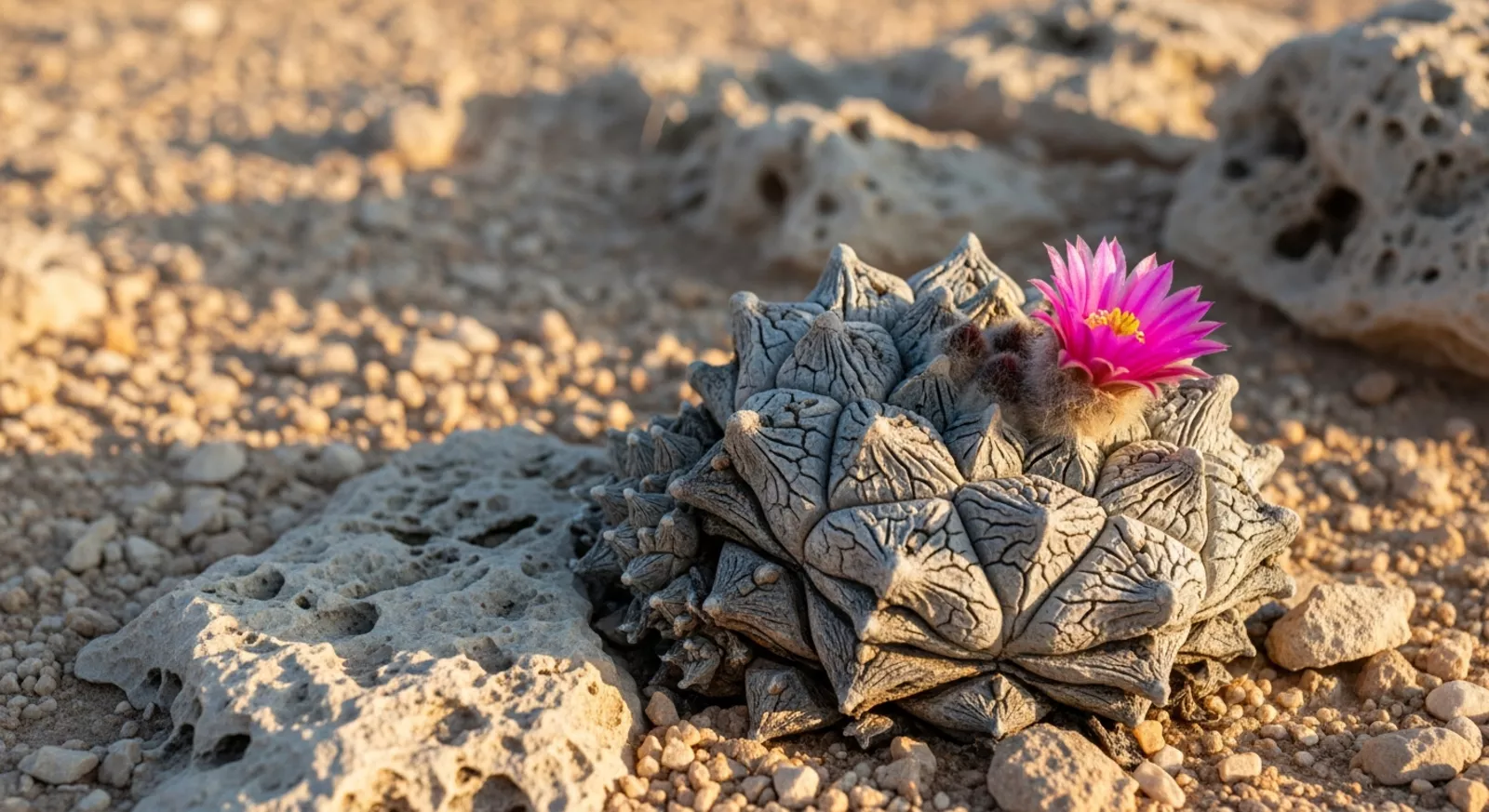
A. fissuratus
living rockCracked like dry clay, flush with the limestone. The only Ariocarpus that reaches the United States.

A. kotschoubeyanus
the buried dwarfThe smallest species, almost completely buried, with a single woolly furrow down each narrow tubercle.

A. retusus
star rockBig, smooth, sharply triangular tubercles sitting up above the ground. The type species, and the largest.

A. trigonus
long-tubercledTall, narrow, incurved tubercles and yellowish flowers. POWO keeps it a full species; living-rocks calls it a subspecies of retusus.
Learn more →
A. bravoanus
a 1992 findA small plant from San Luis Potosí. POWO keeps two subspecies, including the Matehuala form once filed under fissuratus.

A. agavioides
the agave mimicNarrow, elongated, agave-like tubercles, unlike anything else in the genus. Once its own genus, Neogomesia.
Learn more →
A. scaphirostrus
boat-keeledThick, keeled, boat-shaped tubercles. A local Nuevo León species, not often seen.
Learn more →A genus of many forms
Beyond the species lie the old varieties and the crests, variegates, and woolly cultivars like ‘Godzilla’ that collectors prize. Each is catalogued with its parentage and origin.
Explore varieties & formsGrow Ariocarpus
Seed-grown plants, raised in cultivation rather than collected from habitat, are available from our companion shop.
Shop seed-grown AriocarpusSources
- Plants of the World Online (POWO), genus Ariocarpus Scheidw. Royal Botanic Gardens, Kew. powo.science.kew.org
- Living Rocks of Mexico, species list and accounts. living-rocks.com
- Anderson, E.F. & Fitz Maurice, W.A. (1997). Ariocarpus revisited. Haseltonia 5.