 Ariocarpus.org
Ariocarpus retusus
Scheidw., 1838 · Bull. Acad. Roy. Sci. Bruxelles 5: 491 (1838) · the type species of the genus · star rock, living rock, false peyote, chaute, chautle, peyote cimarrón
| Family | Cactaceae |
| Genus | Ariocarpus (type species) |
| Species | A. retusus |
| Authority | Scheidw., 1838 |
| Range | NE Mexico |
| Elevation | 1,300–2,000 m |
| Flowers | White, autumn (Oct) |
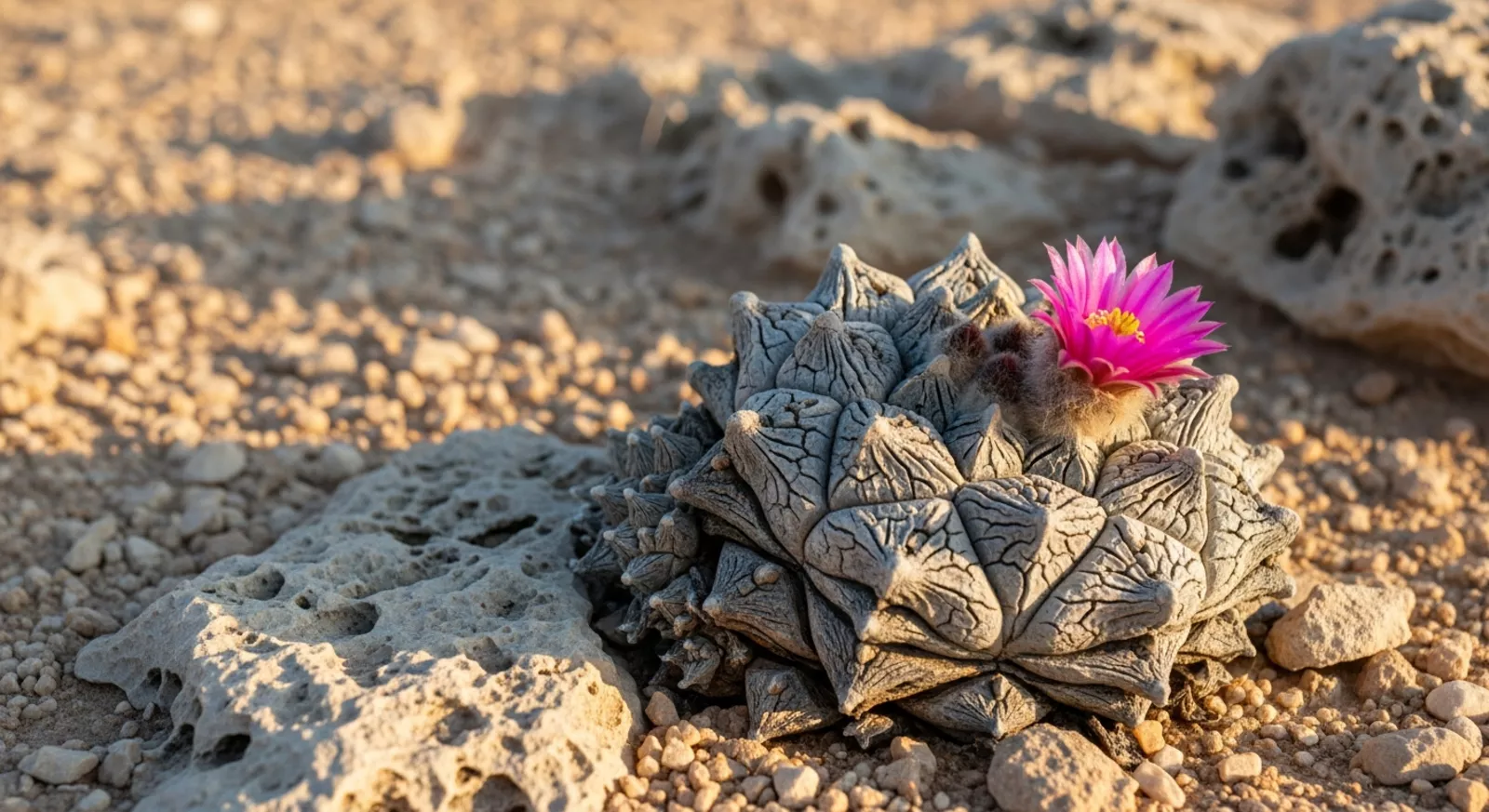
Ariocarpus retusus is the plant that named the whole genus. Scheidweiler described it in 1838, and every other living rock is measured against it. It is also the biggest and smoothest of the bunch, a grey to blue-green dome reaching 25 cm across, sitting up a little proud of the limestone instead of hiding flat in it.
Being the type species is more than a footnote. When you read “Ariocarpus” anywhere, this is the plant the name was built on, fixed by monotypy back when retusus was the only species in the genus.
Where its famous cousin fissuratus reads like cracked pottery pressed into the ground, retusus reads like a fat grey star sitting on top of it. Same family, very different look.
For potting, watering and dormancy notes, see our companion guide to growing Ariocarpus retusus.
The largest living rock
The body is grey or blue-green, globose and rounded on top, and it rises slightly above ground level instead of sitting flush. Plants run 3 to 12 cm high and 10 to 25 cm across, which makes this the biggest Ariocarpus you will meet.
What you notice first are the tubercles. They are divergent and erect, crowded together and squeezed at the base, usually tapering to a point at the tips. Each one is 1.5 to 4 cm long and 1 to 3.5 cm broad. The upper face is convex or nearly flat, sometimes with shallow undulations or a bit of wrinkling, but it is not fissured. That smooth, uncracked surface is the single cleanest way to tell it from fissuratus.
At the tip of each tubercle sits a rounded areole, 1 to 5 mm across. There is a spine-bearing areole there, but on an adult plant it carries no working spines, so for all practical purposes retusus is spineless.
Flowers and fruit
Flowers are diurnal and open in autumn, around October. They are 4 to 5 cm wide and 2 to 4.2 cm long. The outer perianth parts are white, sometimes with reddish midribs, and the inner parts are white too, or rarely magenta. White is the normal color, and that matters for identification, since most of the look-alikes flower in other shades.
Fruit follows the flowers and comes out white, green, or rarely pinkish, roughly 10 to 25 mm long and 3 to 10 mm in diameter.
Where it grows
Retusus lives only in Mexico, scattered through the high Chihuahuan Desert of the northeast. POWO gives the native range as northeastern Mexico, and habitat records put it in Coahuila, Nuevo León, San Luis Potosí, Tamaulipas and Zacatecas.
The core of the range runs from north of Saltillo in Coahuila south toward San Luis Potosí. It grows at 1,300 to 2,000 m, which makes it a comparatively high-elevation Ariocarpus, on calcareous limestone-derived hillsides and now and then on gypsum plains.
Telling it apart
Three species get mixed up with retusus: A. fissuratus, A. trigonus and A. kotschoubeyanus. Surface, size, stance and flower color sort them out.
Next to A. fissuratus, look at the tubercle face and how big the plant is. Retusus is smooth or gently undulate and not fissured, reaches up to 25 cm across, sits raised above the soil, flowers white, and grows high at 1,300 to 2,000 m. Fissuratus has a cracked, fissured face, stays smaller at 5 to 10 cm and occasionally 15, sits level with or barely above the ground, flowers light magenta, and runs lower to about 1,200 m.
Next to A. trigonus, the tubercles give it away. Retusus tubercles are broad, short at 1.5 to 4 cm, crowded and compressed at the base, with white flowers. Trigonus tubercles are not crowded or compressed, they are smooth and strongly incurved, and they are elongate at 3 to 8 cm long, roughly twice as long as wide, with yellow-to-cream flowers. That flower color is the cleanest single tell. Trigonus also sits lower, at 500 to 1,200 m on limestone scree.
Next to A. kotschoubeyanus, size and structure settle it fast. That species is tiny, 1 to 3 cm high and 2 to 7 cm across, rarely rising above ground, and each tubercle carries a single central woolly groove down its length, with magenta to mauve or purple flowers, sometimes white. Retusus is far larger, sits raised, lacks the woolly furrow, and flowers white. The missing furrow is itself a good separator.
Forms recorded within it
Retusus has collected a long list of names over the years, and modern taxonomy following POWO folds nearly all of them back in as synonyms of one variable species. They are still worth knowing, because you will run into them on plant labels and in old catalogs. The one real exception is trigonus, which POWO now treats as its own species rather than a piece of retusus.
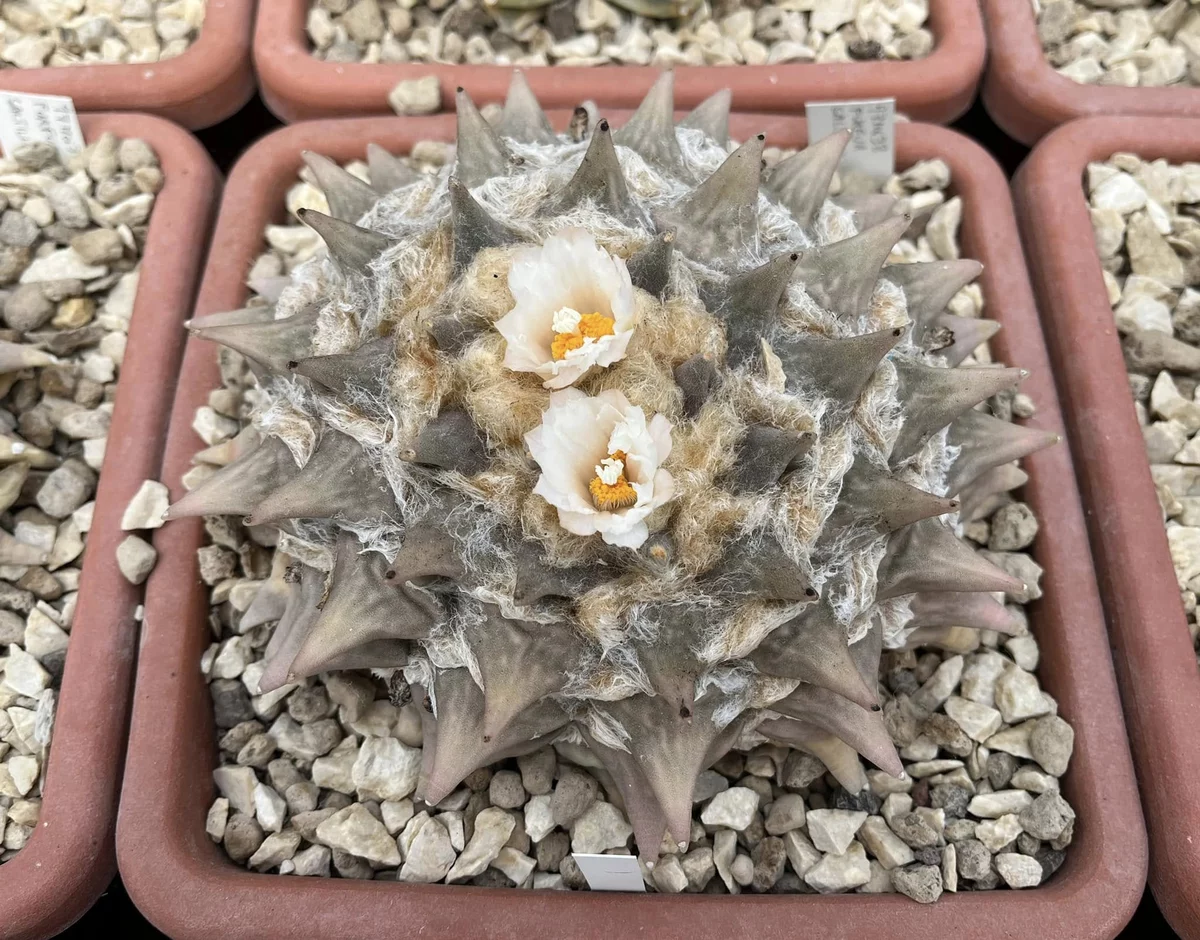
Ariocarpus furfuraceus
Saltillo · Mesa Garden #38SynonymThe broad, equilateral-triangular form sold in the hobby. POWO sinks A. furfuraceus (S.Watson) H.S.Thomps., along with its var. and f. rostratus and f. cristata, into A. retusus. No botanical standing of its own.
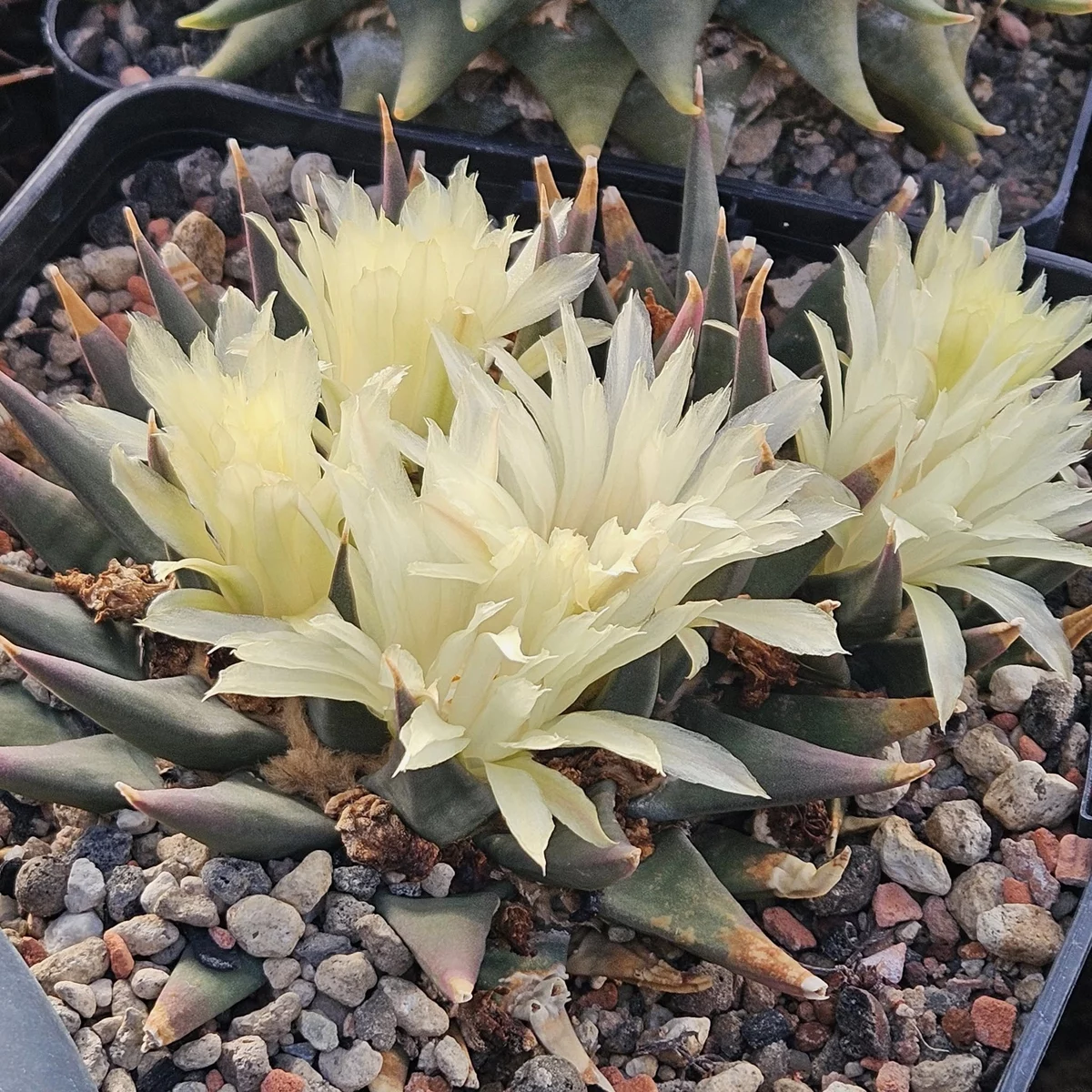
Ariocarpus elongatus
as A. trigonus var. elongatusSynonymListed by POWO as a heterotypic synonym of A. retusus, along with the various elongatus combinations, including some A. trigonus var. elongatus names that route back here.
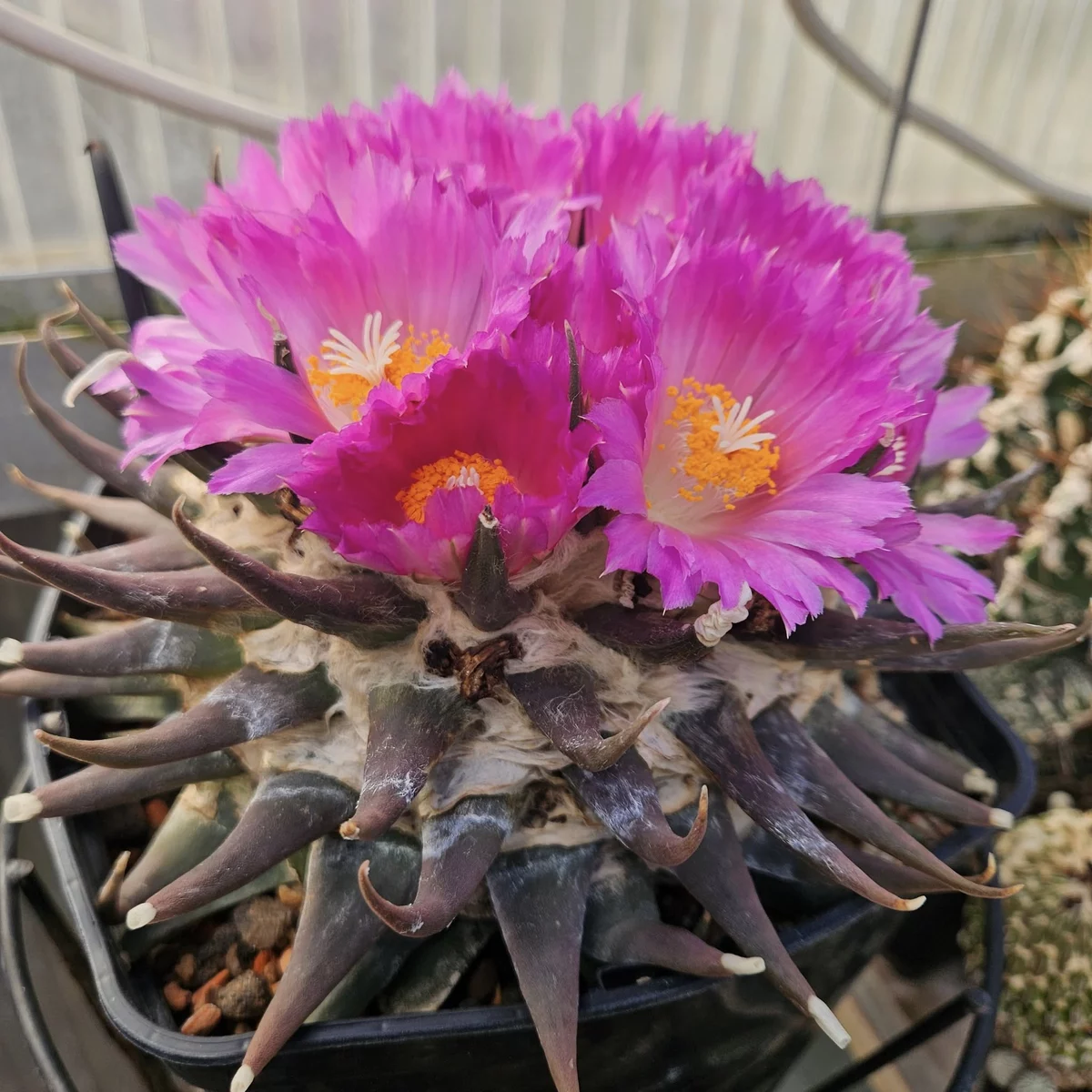
Ariocarpus confusus
SynonymPOWO sinks A. confusus Halda & Horáček under A. retusus. Living-rocks calls it the most distinctive variant in the retusus and trigonus complex, but it carries no taxonomic standing.
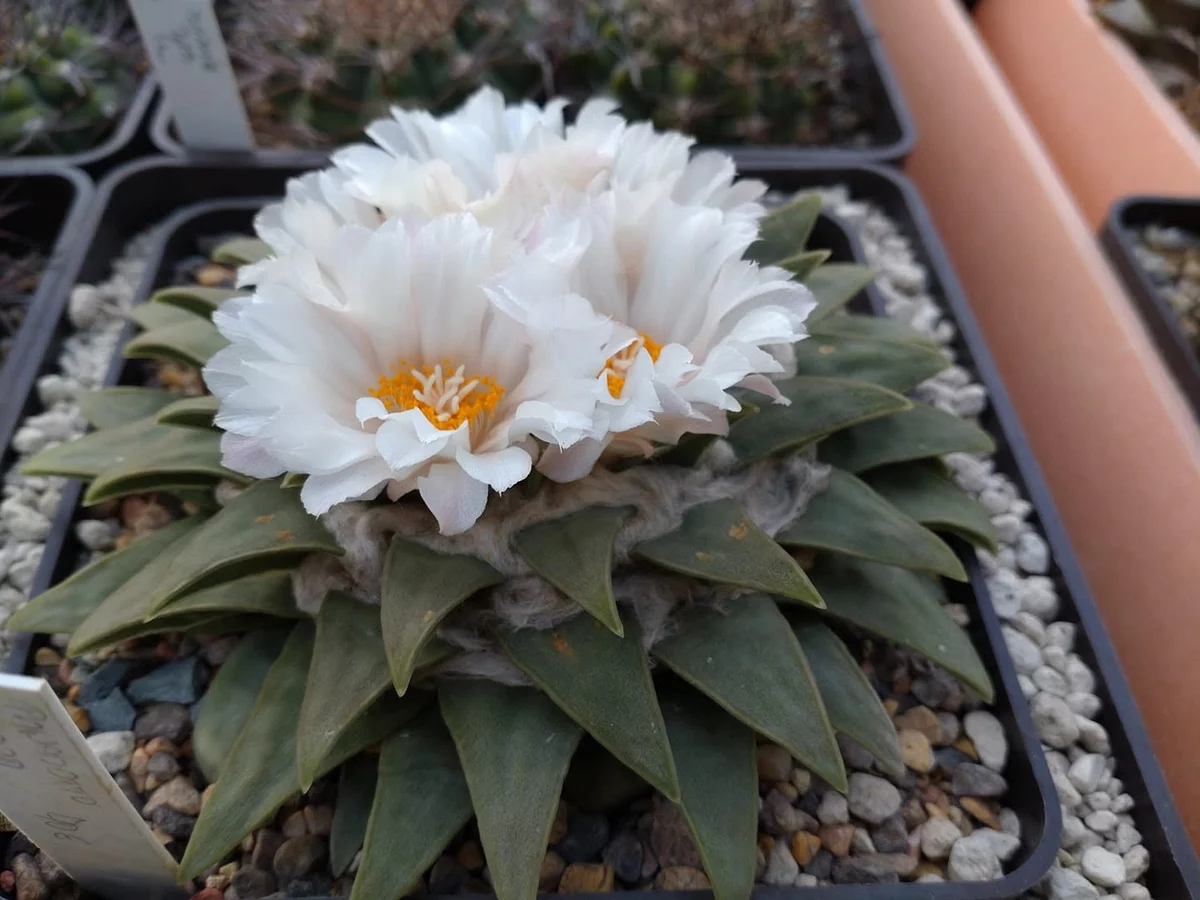
subsp. jarmilae, panarottoi
panarottoi shownSynonymA pair of Halda-era names that turn up only in POWO synonymy under A. retusus, neither accepted. The same goes for pectinatus, sladkovskyi and palomaensis.
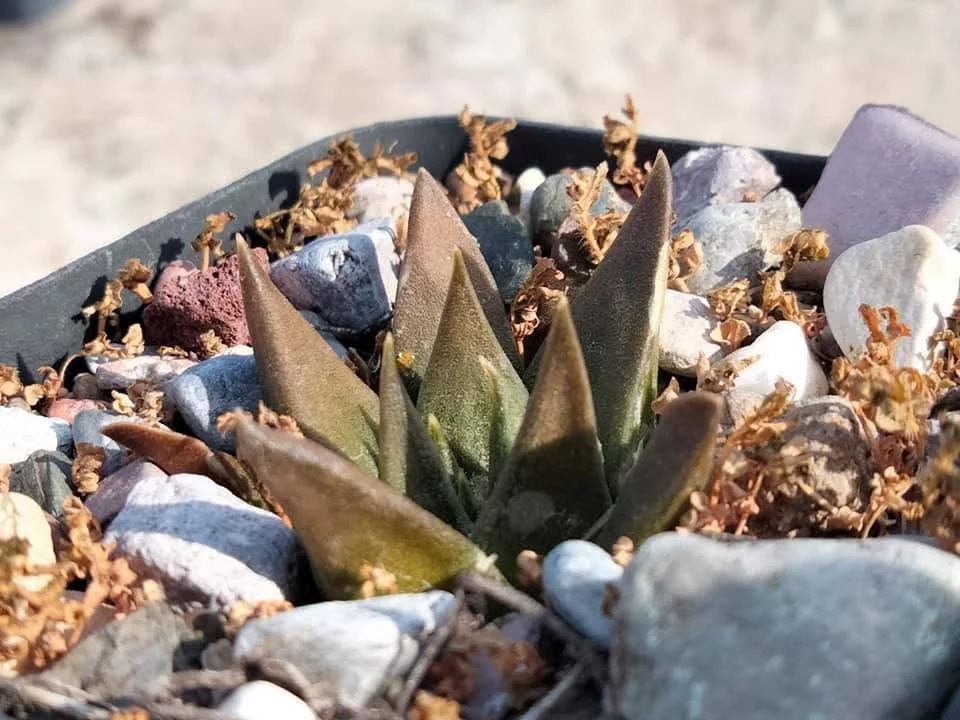
var. horacekii
named under A. trigonusSynonymHalda published this as A. trigonus var. horacekii, but POWO sinks the plant into A. retusus. The name keeps its trigonus epithet; the placement reflects what the plant actually is. From south of Matehuala, San Luis Potosí.
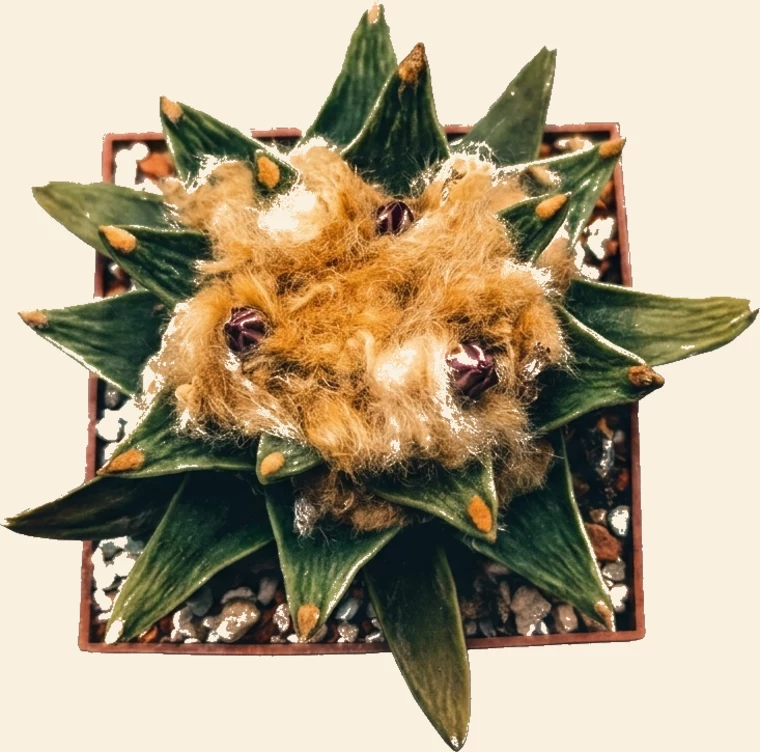
subsp. scapharostroides
VZD117 · El SabinitoSynonymA Halda & Horáček name for plants from the El Sabinito area, which POWO folds into A. retusus as a synonym. The plant shown has its crown packed with the wool the species pushes out as it comes into flower.
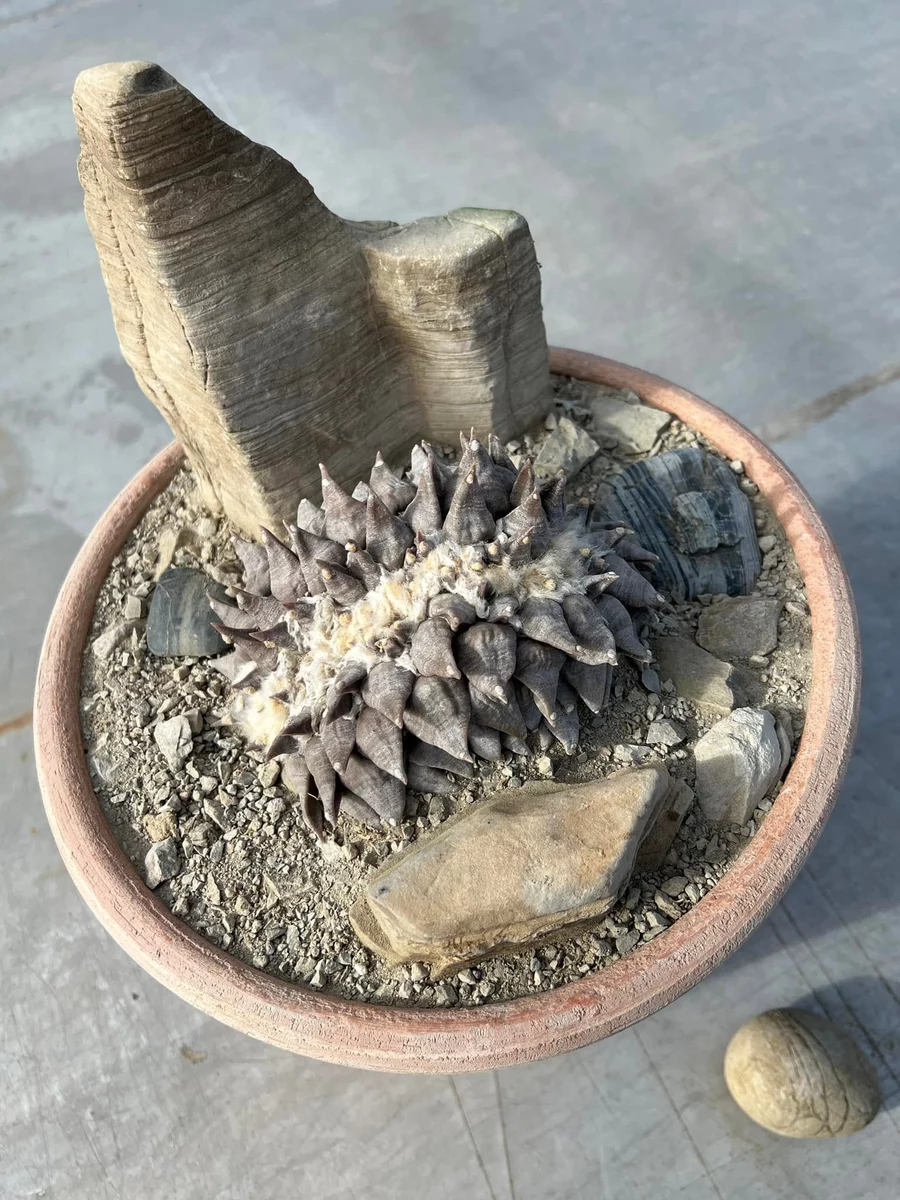
A. retusus ‘cristata’ / cristate
crested formCrestPOWO carries A. furfuraceus f. cristata Frič as a formal synonym, and growers list a cristate retusus crest form. This is a cultivar and trade label, not an accepted taxon.
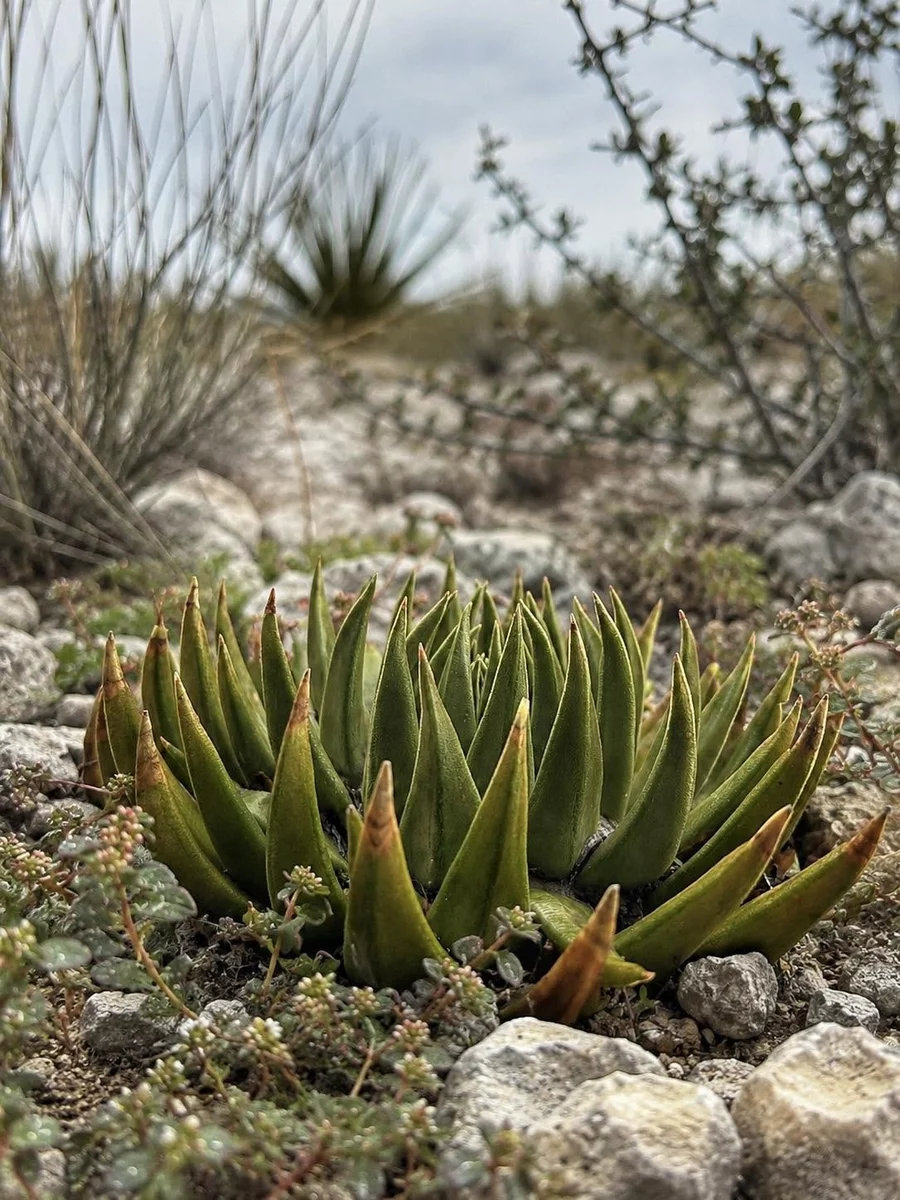
Ariocarpus trigonus
in habitatAcceptedPOWO accepts A. trigonus as its own species, native to Tamaulipas and Nuevo León, not a subspecies of retusus. Living-rocks, following Anderson 1997, treats it as A. retusus subsp. trigonus. We defer to POWO and keep it as a full species.
Grow one yourself
Seed-grown Ariocarpus retusus, raised in cultivation rather than dug from the wild, are available from our companion shop.
Browse seed-grown living rock cactiSources
- Plants of the World Online (POWO), Ariocarpus retusus Scheidw. Royal Botanic Gardens, Kew. powo.science.kew.org
- Plants of the World Online (POWO), Ariocarpus trigonus (F.A.C.Weber) K.Schum., accepted species. powo.science.kew.org
- Living Rocks of Mexico, Ariocarpus retusus species and habitat account. living-rocks.com
- Living Rocks of Mexico, Ariocarpus trigonus, identification contrast. living-rocks.com
- Living Rocks of Mexico, Ariocarpus kotschoubeyanus, identification contrast. living-rocks.com