 Ariocarpus.org
Ariocarpus fissuratus
(Engelm.) K.Schum. · basionym Mammillaria fissurata Engelm., 1856 · the living rock, star cactus, chautle, false peyote
| Family | Cactaceae |
| Genus | Ariocarpus |
| Species | A. fissuratus |
| Authority | (Engelm.) K.Schum. |
| Basionym | Mammillaria fissurata, 1856 |
| Range | W. Texas to NE Mexico |
| Elevation | to ≈ 1,200 m |
| Flowers | Light magenta, Oct–Nov |
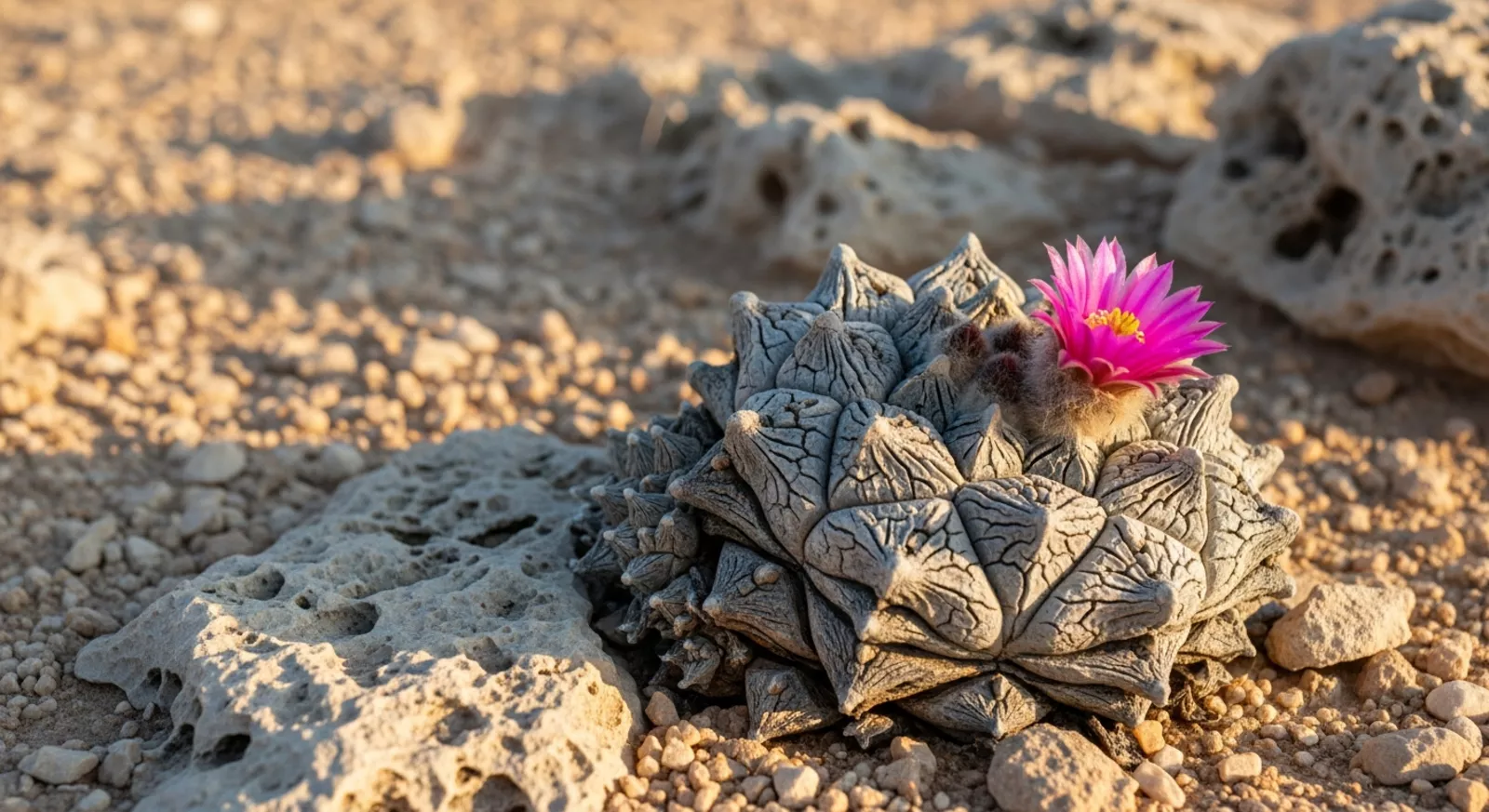
Ariocarpus fissuratus barely looks like a plant. It sits flush with the limestone, gray-green and broken into a mosaic of hard, cracked tubercles, so most of the year it reads as just another stone on the desert floor. Then in fall it opens a magenta flower and gives itself away.
That camouflage is the whole point, and it is why people call it the living rock. It is also the most widespread Ariocarpus, and the only one that grows north of the Rio Grande.
If you are growing one rather than just identifying it, our companion site has a full Ariocarpus fissuratus care guide.
The fissured living rock
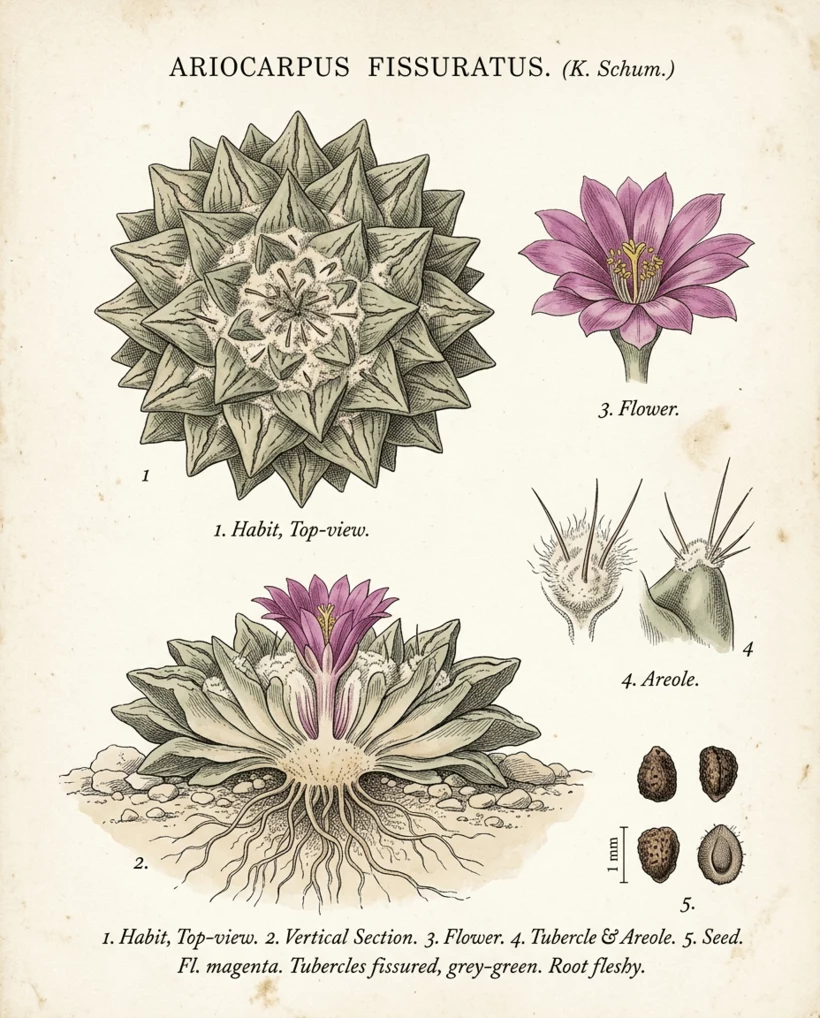
The body is low and round on top, usually 5 to 10 cm across, sometimes 15, sitting level with the ground or just barely above it. Most of the plant is out of sight. Below the surface is a thick, turnip-like taproot that stores water and anchors the whole thing through the dry season.
What shows at ground level is a rosette of triangular tubercles, each about 10 to 20 mm long and a little wider than it is long. The top face of every tubercle is hard and split into fissures. That cracked texture is where the name comes from, since fissuratus just means fissured. A woolly groove runs down the center of each one, and that wool is where the flowers come from. No spines anywhere.
Flowers and fruit
Flowers come up one at a time from the woolly grooves near the center, so they look like they are sitting right in the crown. They are light magenta, roughly 2.5 to 4.5 cm wide, and they open in October and November. Each one lasts only three or four days. After that the plant sets small whitish or greenish fruit, 5 to 15 mm long, full of dull black seed.
Where it grows
This is the only Ariocarpus that makes it into the United States. It runs through the Big Bend country of southwest Texas, around Lajitas, Terlingua, Marathon and the Rio Grande, then crosses south into Chihuahua, Coahuila, Durango, Zacatecas and Nuevo León. POWO also lists it from Jalisco.
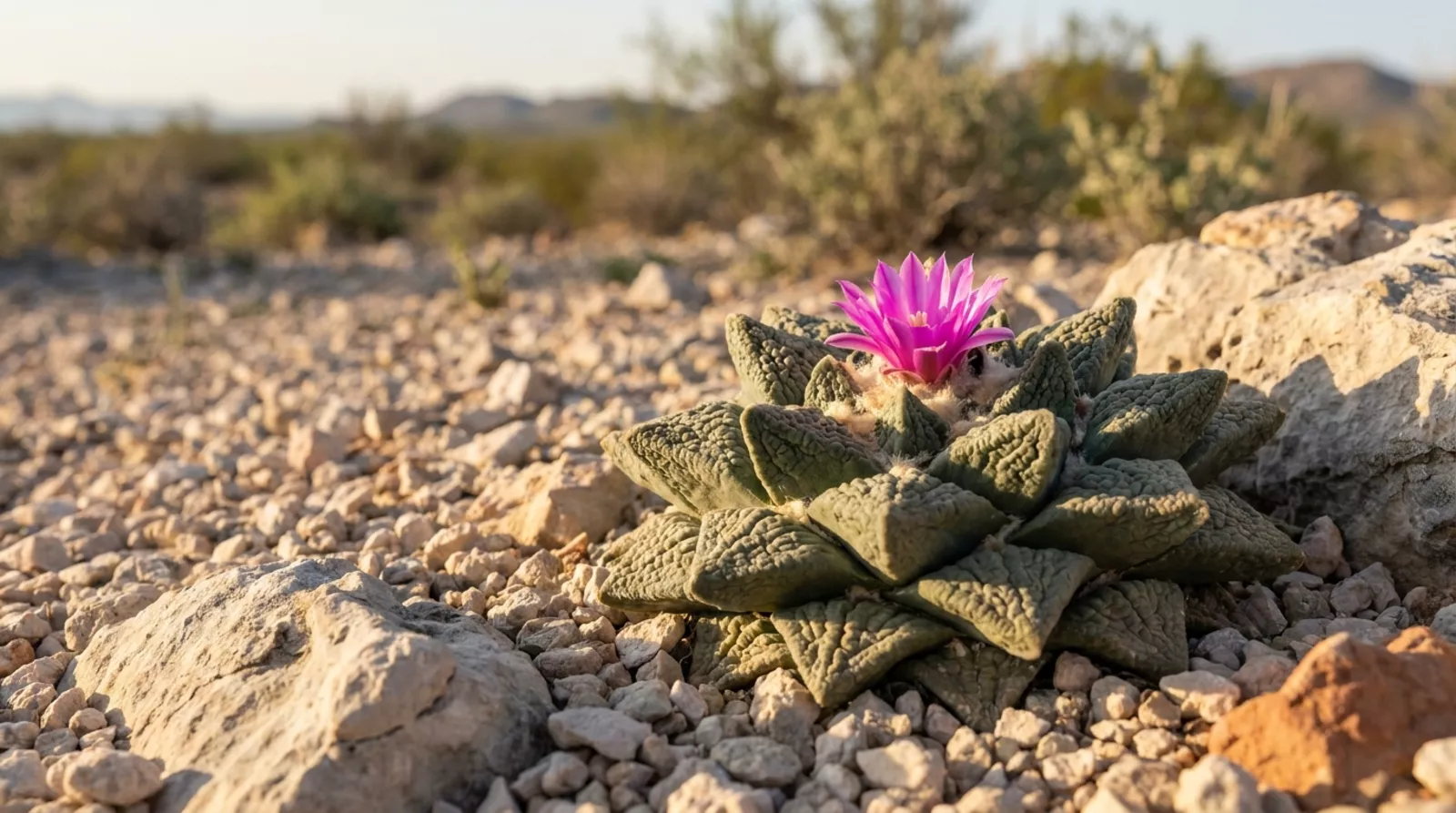
It is picky about one thing: limestone. You find it on broken limestone slopes and flats, in packed sandy clay, scattered through Chihuahuan Desert scrub, mostly below about 1,200 m, though some groups grow higher. It was first described in 1856 from limestone hills along the Rio Grande in south Texas, back when it carried the name Mammillaria fissurata.
Telling it apart
Two species get confused with it: A. retusus and A. kotschoubeyanus.
Next to A. retusus, the giveaway is the surface and the stance. Retusus has larger, smoother, sharply triangular tubercles and sits up out of the ground. Fissuratus has broad, cracked, rough tubercles and stays flush with the soil. If it looks like cracked pottery, it is fissuratus.
Next to A. kotschoubeyanus, size settles it. Kotschoubeyanus is much smaller, with narrow tubercles that each carry a single woolly furrow, and it never shows the broad fissured mosaic of fissuratus.
Forms recorded within it
Growers spent a long time splitting fissuratus into separate varieties. Modern taxonomy, following POWO, treats it as one variable species and folds almost all of those names back in as synonyms. They are still worth knowing, because you will run into them on plant labels and in old catalogs.
var. lloydii
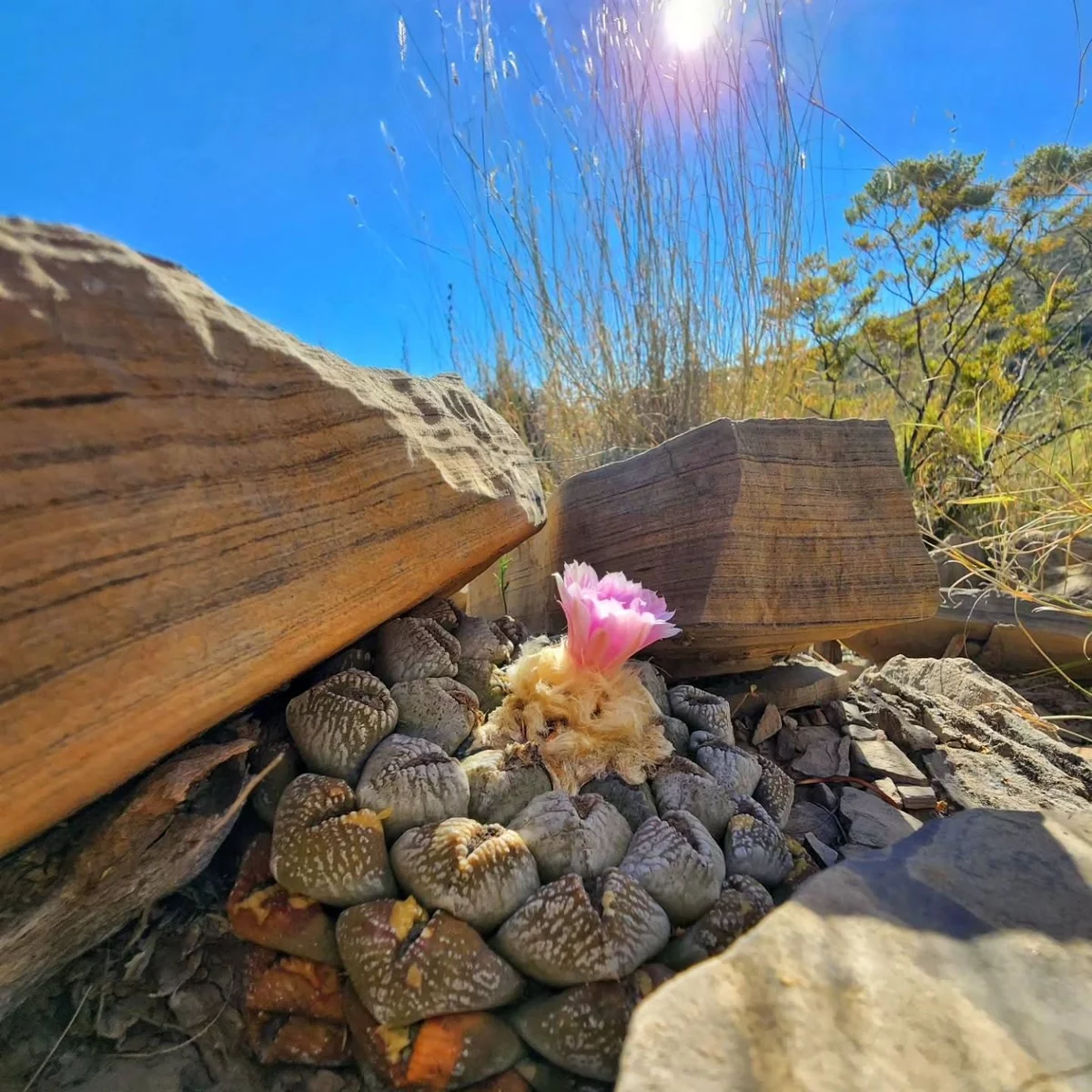
the big southern formSynonymThe big southern form, rounder and more dome-shaped than the typical plant. Described from around Parras and Viesca in southern Coahuila, reaching into Zacatecas and Durango.
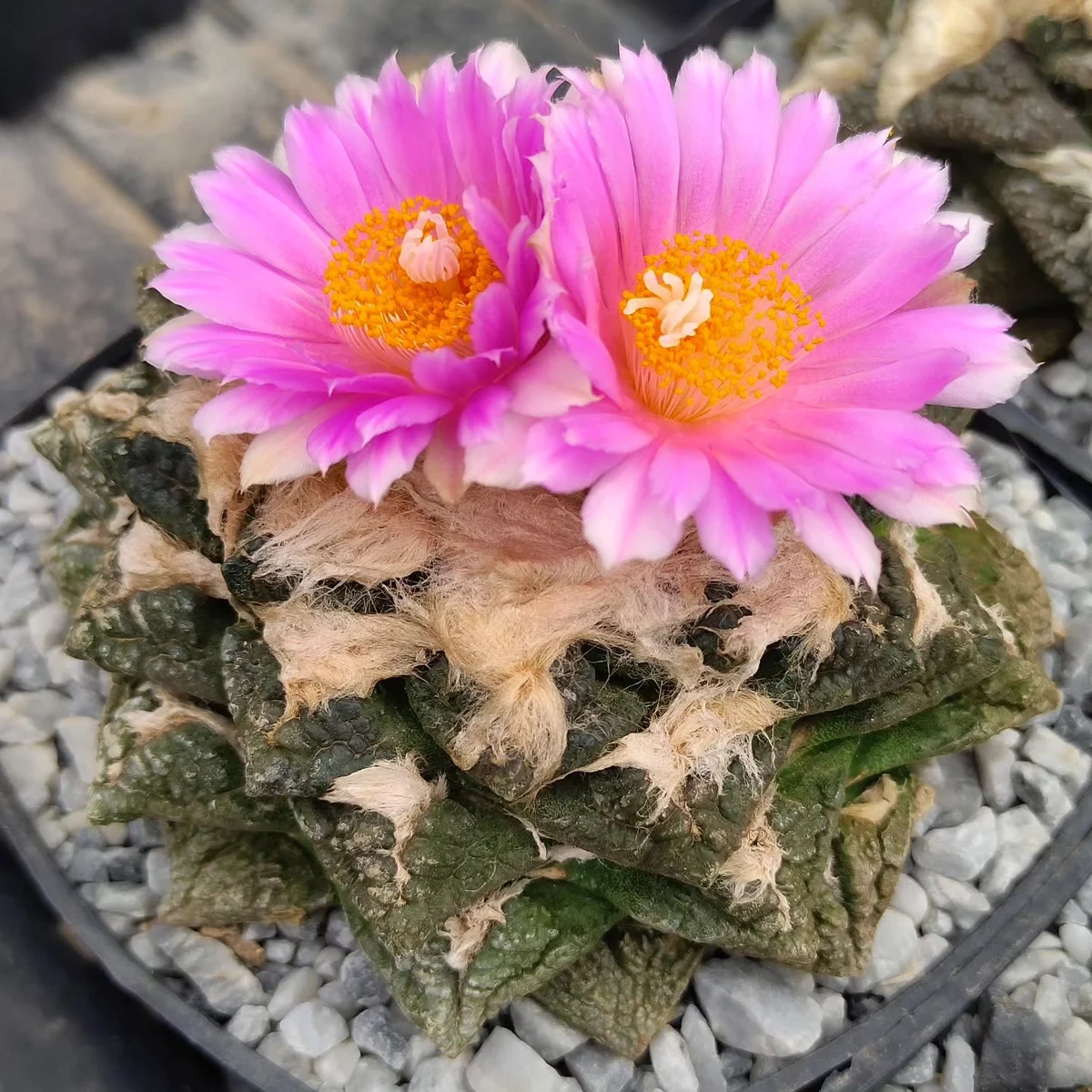
f. intermedius
the in-between formSynonymSits halfway between typical fissuratus and lloydii, which is how it got the name. Known from between Cuatrociénegas and Estación Marte in Coahuila.
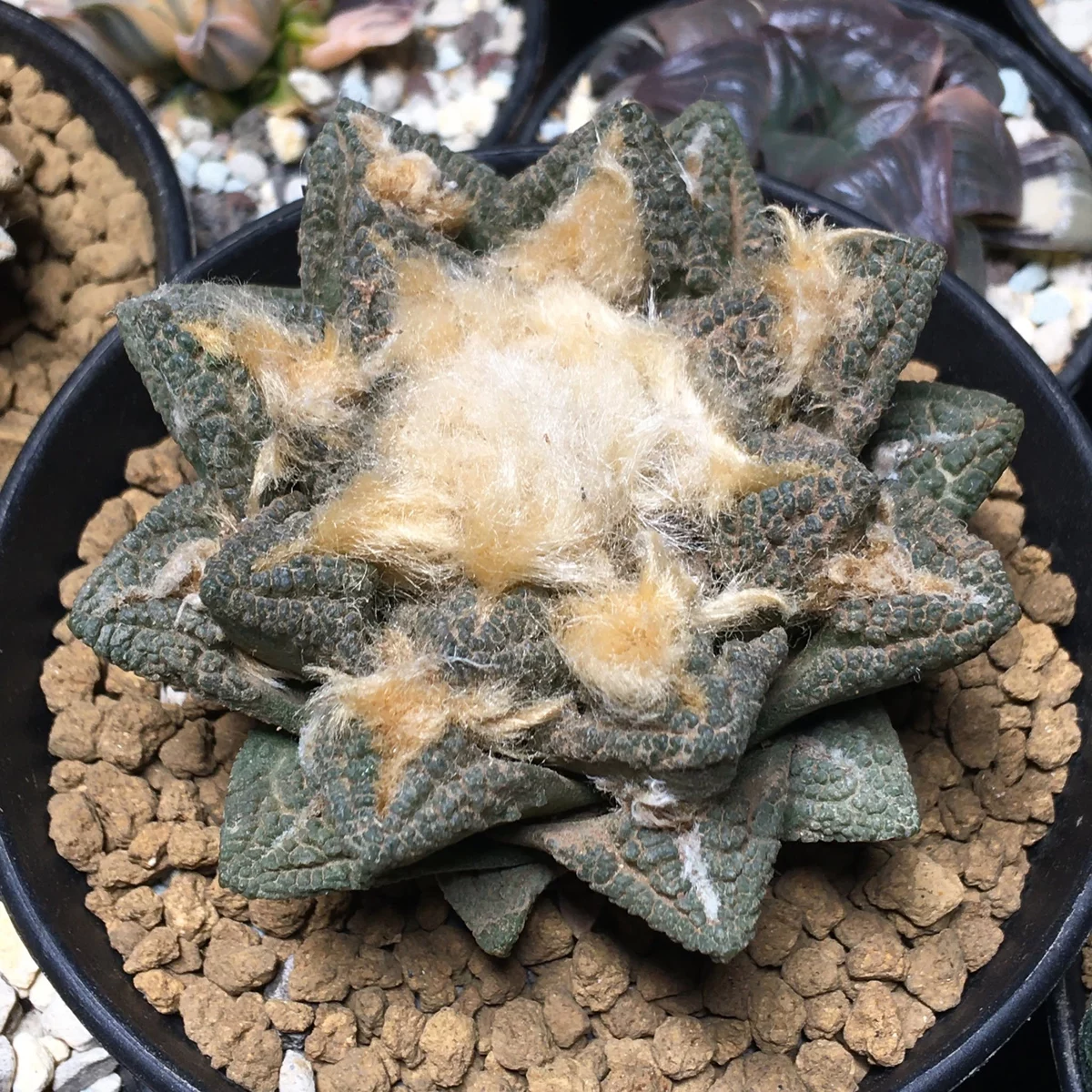
var. pailanus
Sierra de la PailaSynonymA form from the Sierra de la Paila in Coahuila. Also sunk into the species.
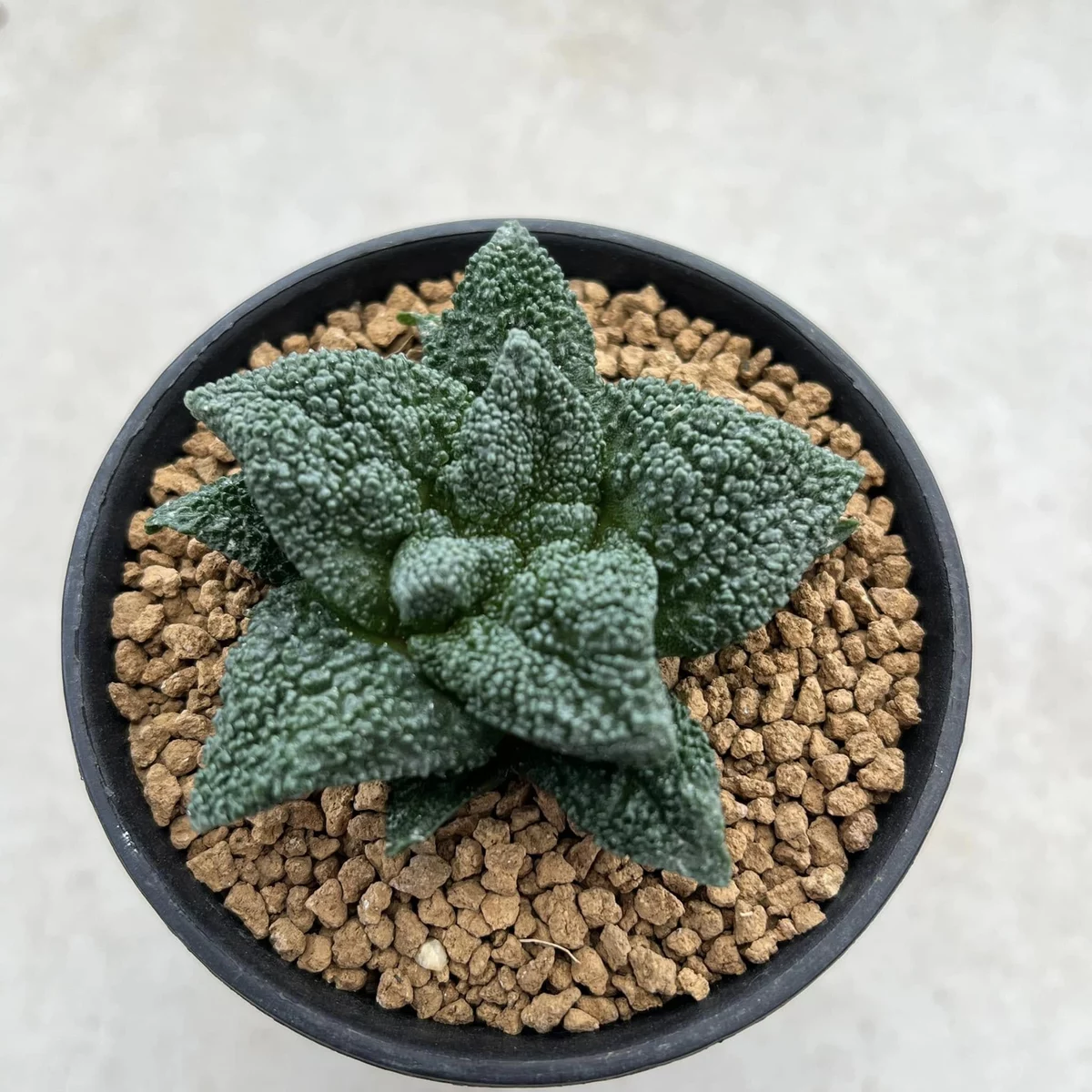
var. hintonii
SB 1568 · MatehualaMovedOnce filed here, this small San Luis Potosí plant now sits under a different species entirely.
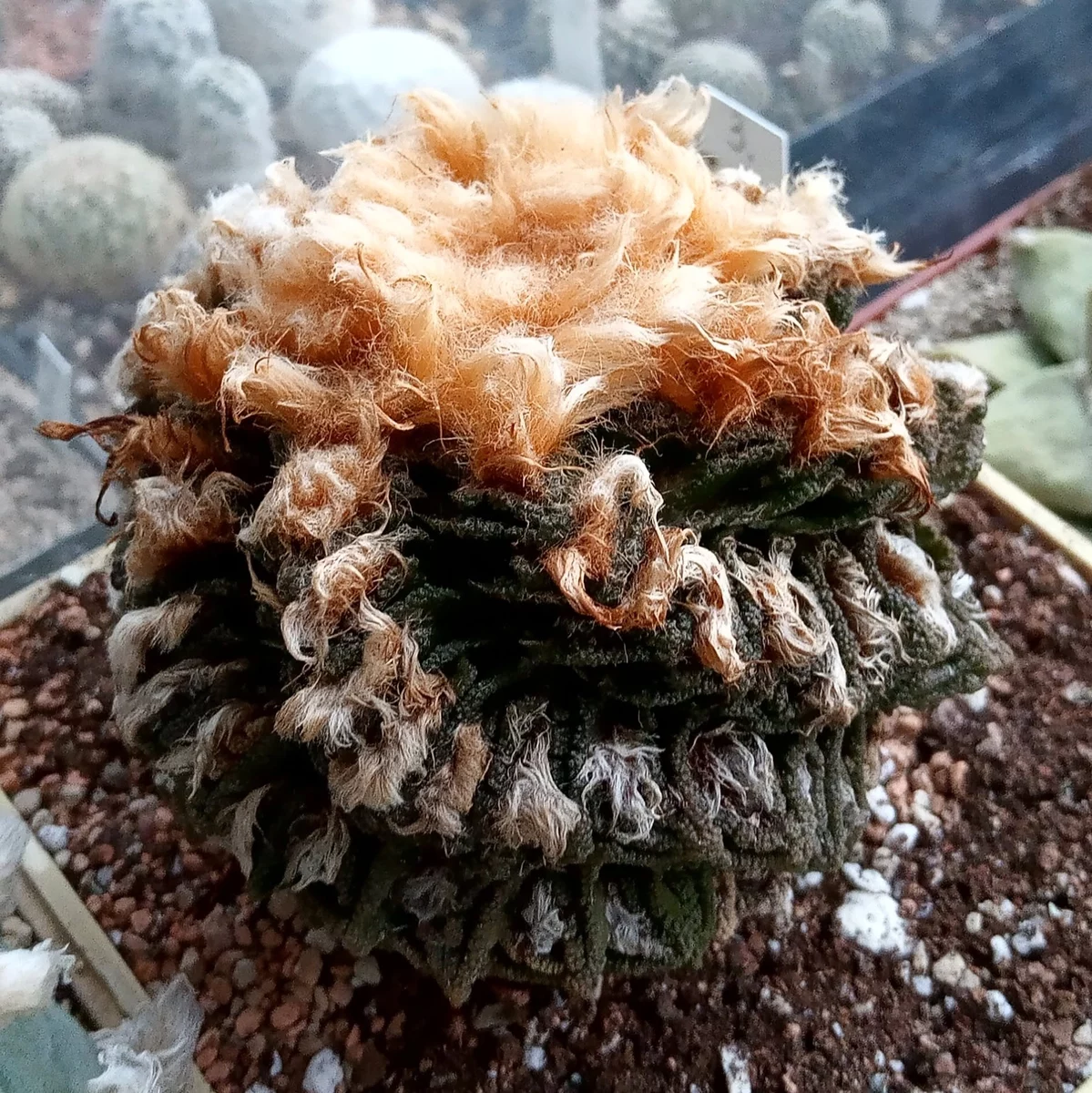
cv. ‘Godzilla’
Japanese cv.CultivarA sought-after Japanese cultivar, the Cotton Flock type, loaded with extra wool over a deeply textured surface. Crested and variegated plants turn up in this group too.
Grow one yourself
Seed-grown Ariocarpus fissuratus, raised in cultivation rather than dug from the wild, are available from our companion shop.
Shop seed-grown Ariocarpus fissuratusSources
- Plants of the World Online (POWO), Ariocarpus fissuratus (Engelm.) K.Schum. Royal Botanic Gardens, Kew. powo.science.kew.org
- Living Rocks of Mexico, Ariocarpus fissuratus species and habitat accounts. living-rocks.com
- Anderson, E.F. & Fitz Maurice, W.A. (1997). Ariocarpus revisited. Haseltonia 5.
- Llifle, Encyclopedia of Living Forms, Ariocarpus fissuratus.