 Ariocarpus.org
Identifying Ariocarpus
The marks that place the genus, and the features that sort out the species
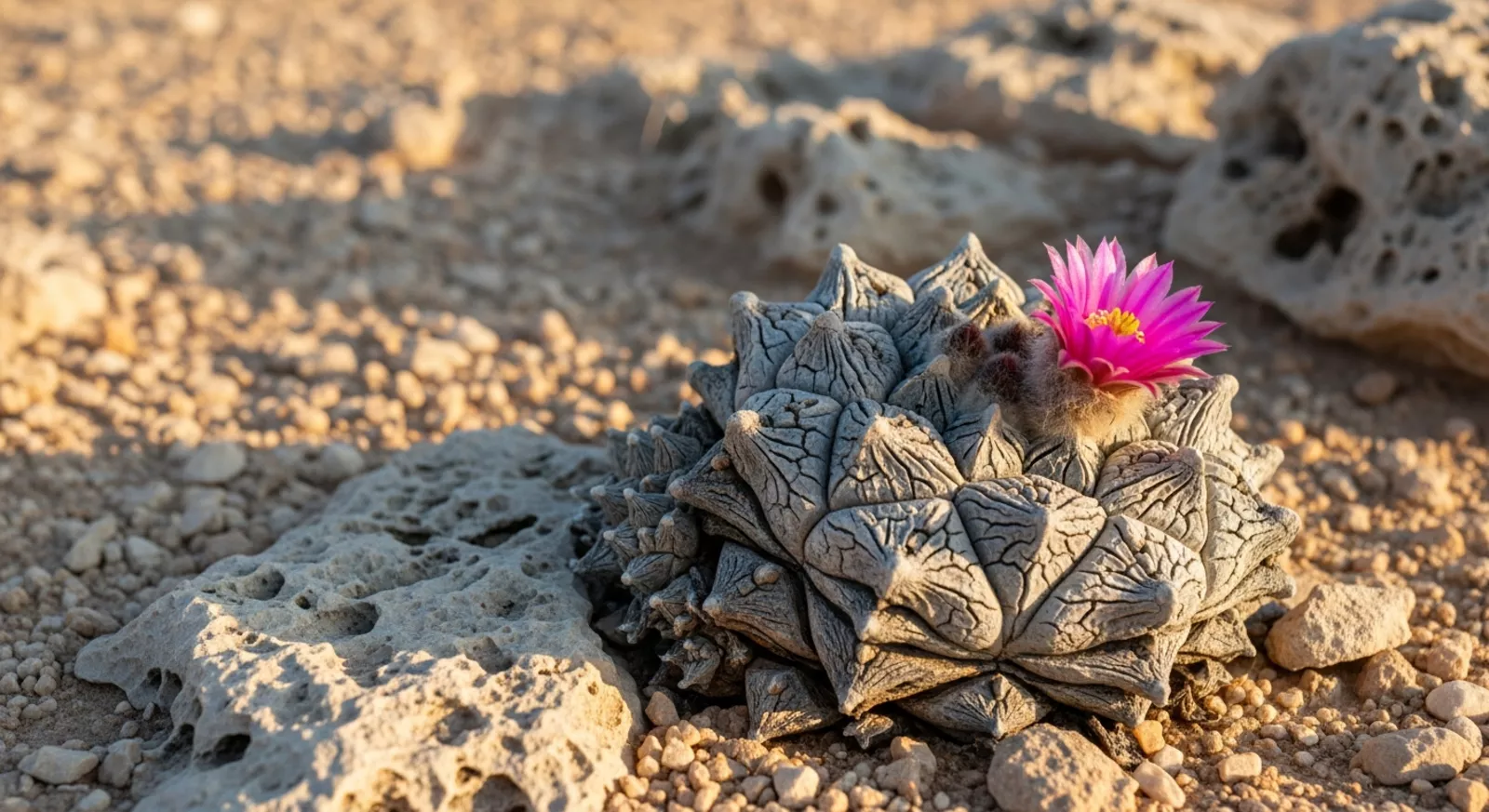
Ariocarpus are built to be overlooked. They sit flat in the dirt, the color of the rocks around them, and a passing eye slides right over them. Once you know what to look for, though, the genus is easy to place, and the species sort out by just a few features.
What makes it an Ariocarpus
Five things, taken together, mark the genus:
- No spines on the adult plant. A few seedlings carry them briefly, then lose them.
- A body that sits flush with the ground or below it, growing off a thick taproot that pulls the plant down in drought.
- Triangular, leaf-like tubercles laid out in a flat rosette, not the ribs or round bumps you see on most cacti.
- A patch of wool in the center of the rosette. Flowers come straight out of that wool, usually in fall.
- Small, smooth, club-shaped fruit that often stays hidden in the wool until it dries.
Sorting out the species
Once you know it is an Ariocarpus, the tubercles do most of the work:
- A. fissuratus: broad tubercles with a hard, cracked, fissured top, like dried mud. Flush with the soil. Light magenta flowers.
- A. retusus: bigger, smoother, sharply triangular tubercles, and it sits up above the ground rather than flat in it. The largest species.
- A. trigonus: tall, narrow, incurved tubercles and yellowish flowers, unlike the magenta and pink of the rest.
- A. kotschoubeyanus: tiny and nearly buried, each narrow tubercle carrying one woolly furrow down its middle. Pink flowers.
- A. agavioides: long, narrow, agave-like tubercles that look nothing like the others in the genus.
- A. scaphirostrus: thick, keeled, boat-shaped tubercles. A local Nuevo León plant.
- A. bravoanus: small, from San Luis Potosí; subsp. hintonii is smaller still.
The two most often mixed up are fissuratus and retusus. The quick test: if the tubercle surface looks like cracked pottery and the plant sits flush with the ground, it is fissuratus. If the tubercles are smooth and the plant stands a little proud of the soil, it is retusus.
Telling them apart is one half of the job; keeping them alive is the other, covered in our Ariocarpus care guide on the companion site.
See them up close
Seed-grown Ariocarpus, raised in cultivation, let you study the tubercles and flowers without touching a wild plant.
See seed-grown Ariocarpus up closeSources
- Plants of the World Online (POWO), genus Ariocarpus and species records. powo.science.kew.org
- Living Rocks of Mexico, species accounts. living-rocks.com
- Llifle, Encyclopedia of Living Forms, Ariocarpus.