 Ariocarpus.org
Ariocarpus kotschoubeyanus
Ariocarpus kotschoubeyanus (Lem.) K.Schum. · First published in Engler & Prantl, Nat. Pflanzenfam., Nachtr. 1: 259 (1897) · Basionym Anhalonium kotschoubeyanum Lem. · Living rock cactus
| Family | Cactaceae |
| Genus | Ariocarpus |
| Species | A. kotschoubeyanus |
| Authority | (Lem.) K.Schum. |
| Range | Northeast Mexico (Coahuila to Querétaro) |
| Elevation | approx. 1,000–1,400 m |
| Flowers | Magenta to pink, rarely white |
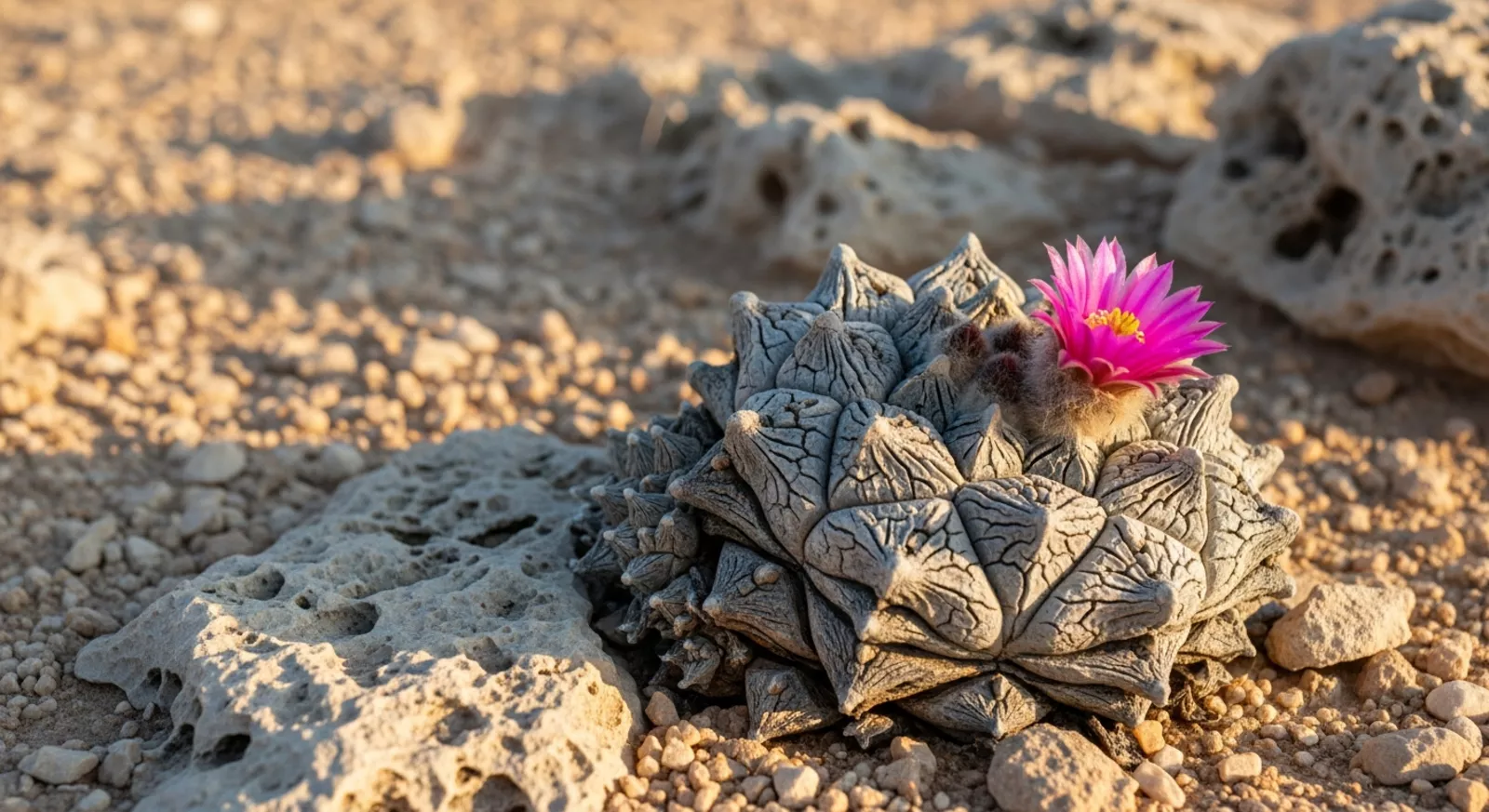
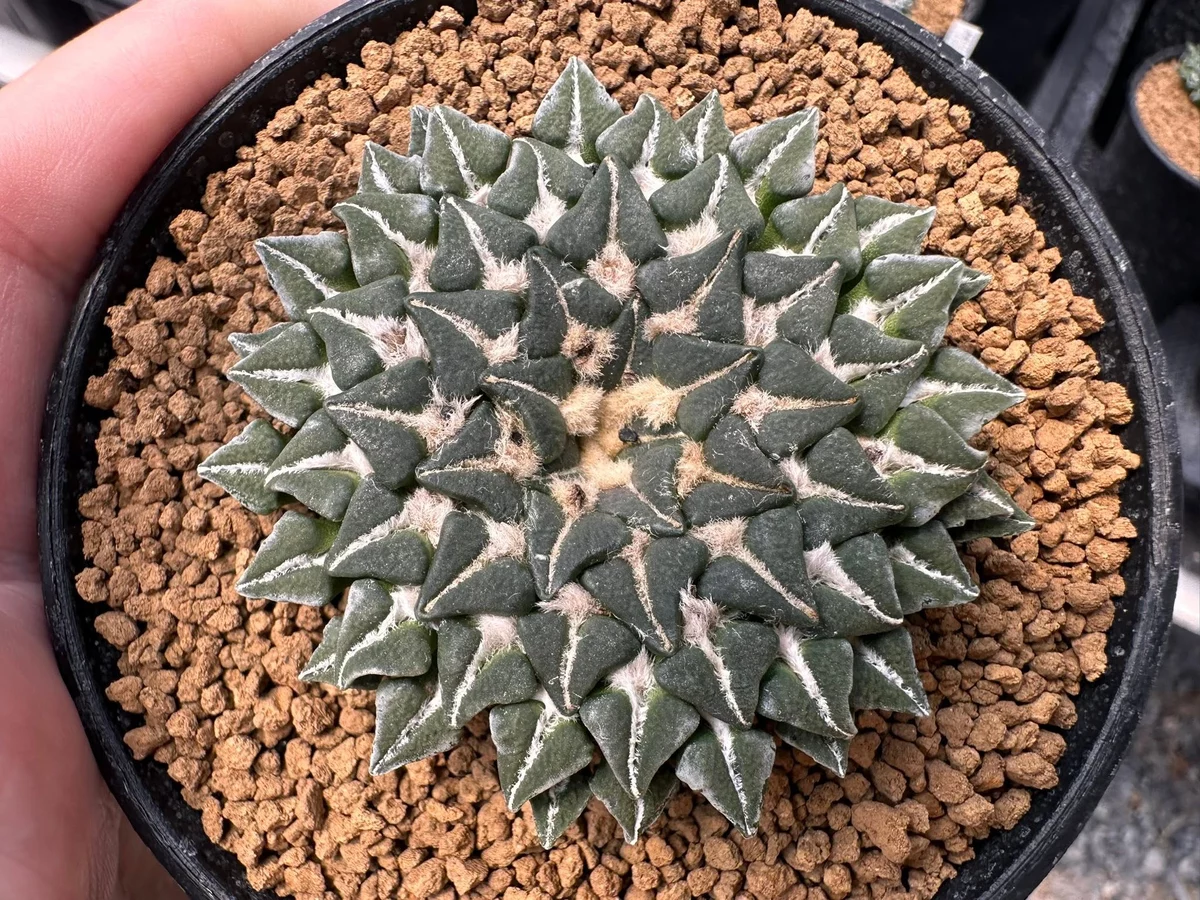
Walk across the right clay flat in northeast Mexico and you could step on dozens of these cacti without ever seeing one. Ariocarpus kotschoubeyanus is the smallest species in the genus, and it grows almost entirely underground. Only the flat gray-green tops of its tubercles sit flush with the soil, each split by a single woolly groove.
A mature plant measures just 2 to 7 cm across and rises only 1 to 3 cm above the dirt, if that. Most of the body is a fat taproot buried out of sight. The visible part is a low rosette of triangular tubercles pressed tight against the ground.
The trick that keeps it hidden also keeps it alive. Pulled down flush with the surface during dry spells, it dodges grazing animals and the worst of the sun, then swells back up when rain returns. People have walked these flats for generations without spotting a single plant until the magenta flowers gave them away.
It is unforgiving about overwatering; our companion site covers the species in its Ariocarpus kotschoubeyanus care guide.
What it looks like
The body is dark olive to gray-green and stays small. Across the top it runs 2 to 7 cm wide, and it lifts only 1 to 3 cm out of the soil, so the flat crown often sits level with the surrounding dirt.
Each tubercle is the giveaway. They start narrow at the base and widen into a broad, flattened triangle, roughly 5 to 13 mm long and 3 to 10 mm wide. Down the center of every tubercle runs a single longitudinal groove lined with wool, and the areole sits inside that furrow rather than at the tip. No other common Ariocarpus carries one neat woolly slot per tubercle like this.
Below ground the plant is mostly taproot, thick and tapering, which anchors it and stores water through long dry stretches.
Flowers and fruit
Flowers open from the woolly center of the plant and are large for such a tiny cactus, about 1.5 to 2.5 cm across and a similar length. The usual color is bright magenta to pink, with a paler throat. White-flowered plants turn up here and there but are the exception.
The style runs about 1.4 to 1.6 cm long and carries 4 to 6 stigma lobes. After flowering the plant produces a small reddish to pinkish berry, roughly 5 to 18 mm long and only 1 to 3 mm wide, that ripens low in the wool and releases black seed.
Where it grows
This is a northeast Mexico endemic with a surprisingly wide footprint. POWO records it across that region, and field accounts place it from central Coahuila south to Querétaro, taking in Zacatecas, San Luis Potosí, Nuevo León, and Tamaulipas along the way, a spread of more than 600 km.
It favors flat, open ground rather than slopes. The classic site is a silty or clay flat over limestone-derived gypsum, the kind of cracked, sun-baked pan that holds little else. Recorded elevations run roughly 1,000 to 1,400 m, low for the genus.
On these flats the plant sits flush with the crust, often ringed by bare soil, which is exactly why it is so easy to miss and so hard to count.
Telling it apart
Size and posture sort it out fast. A. kotschoubeyanus is the smallest Ariocarpus and the flattest, sitting buried with only its tubercle tops showing.
A. fissuratus is larger and its broad, gray tubercles are scored with rough, irregular cracks and fissures across the whole surface, not a single clean central groove. A. retusus is bigger still, with large, raised, smooth-faced triangular tubercles that stand well clear of the soil. A. agavioides breaks the pattern entirely, with long, narrow, finger-like tubercles that look more like an agave leaf than a flat rosette. If the plant is tiny, ground-flush, and each tubercle wears one woolly furrow, you are looking at kotschoubeyanus.
Forms recorded within it
POWO treats this as a single, variable species and folds the named forms below into synonymy. Several still circulate among growers as useful field labels, and the full synonymy is listed on our /varieties/ page.
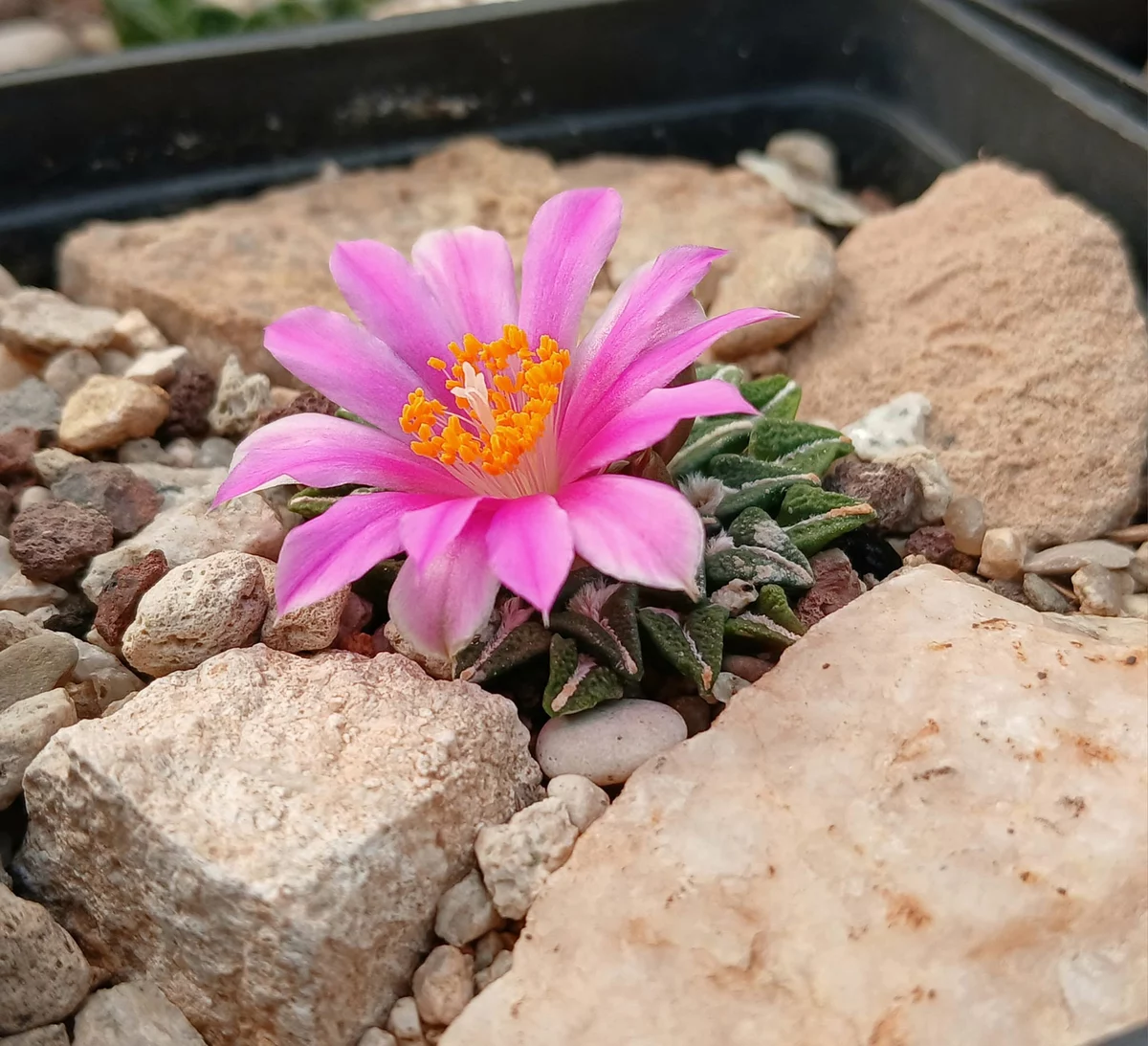
var. macdowellii
small northern formSynonymA small northern form, originally described as Roseocactus kotschoubeyanus subsp. macdowellii Backeb. Plants run smaller than typical and carry pale, mauve to washed-out flowers, with tubercle tips that can look slightly hooked.
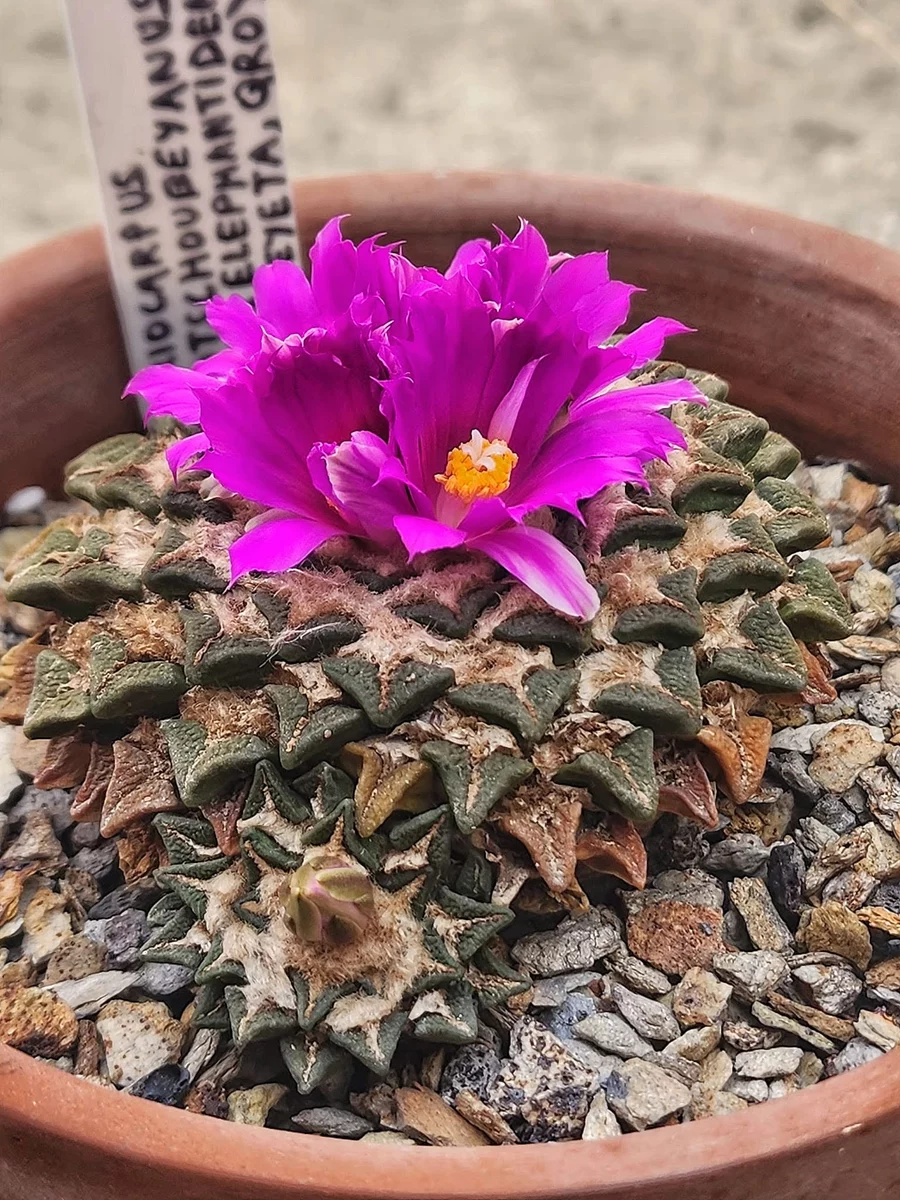
subsp. elephantidens
large tuberclesSynonymA large-tubercled southern form published as Ariocarpus kotschoubeyanus subsp. elephantidens Halda. Plants reach a bigger size and tend toward deeper purple flowers.
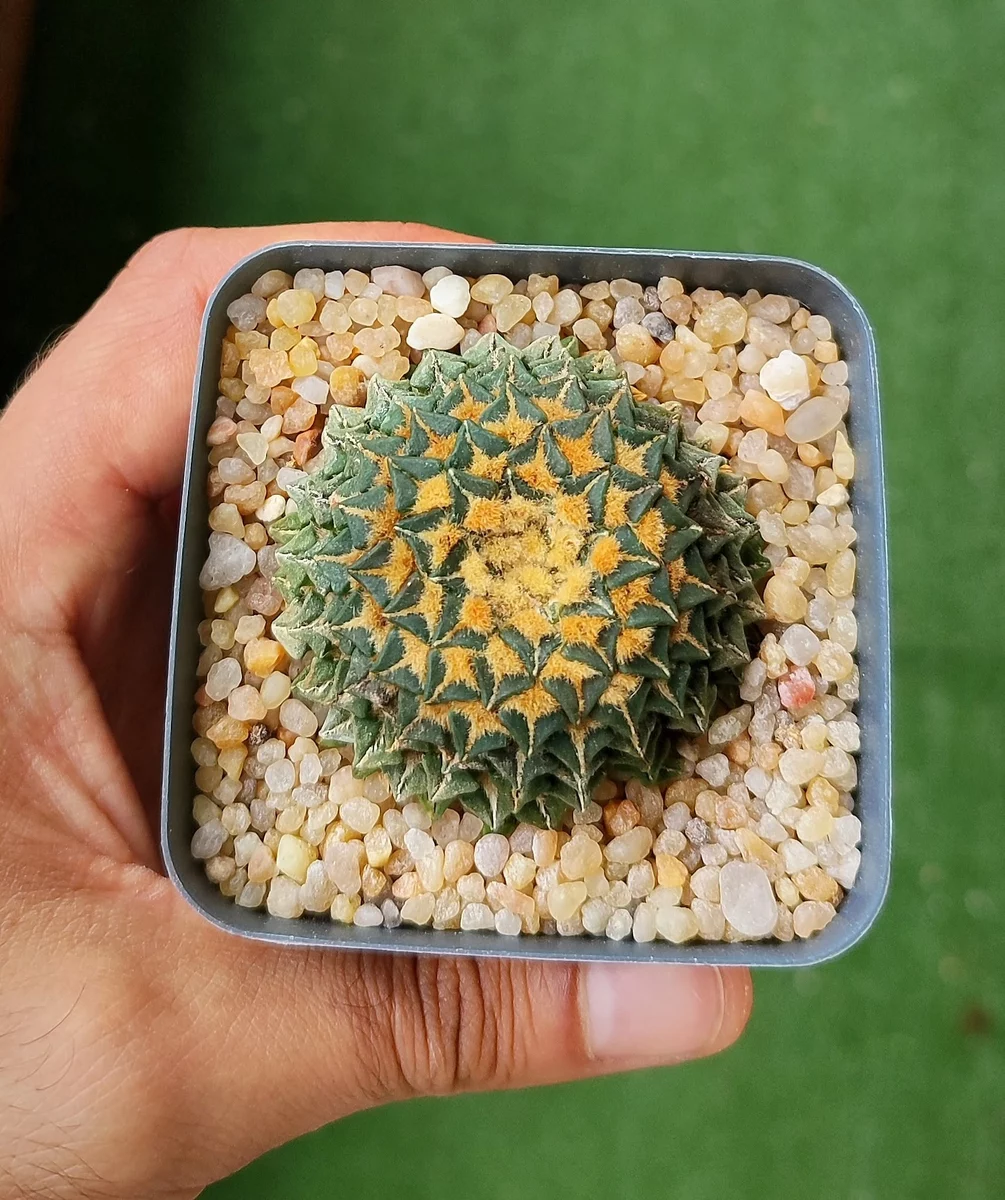
subsp. albiflorus
white-floweredSynonymThe white-flowered form, described as Roseocactus kotschoubeyanus var. albiflorus Backeb. and later recombined by Glass. Reported chiefly from Tamaulipas, it replaces the usual magenta with near-white petals.
subsp. sladkovskyi
SynonymA grower-circulated form published as Ariocarpus kotschoubeyanus subsp. sladkovskyi Halda & Horáček. POWO lists it among the heterotypic synonyms of the species.
Grow one yourself
Seed-grown Ariocarpus kotschoubeyanus, raised in cultivation rather than dug from the wild, are available from our companion shop.
Shop seed-grown Ariocarpus from our greenhouseSources
- Plants of the World Online (POWO), Royal Botanic Gardens, Kew: Ariocarpus kotschoubeyanus (Lem.) K.Schum. powo.science.kew.org
- Living Rocks of Mexico (living-rocks.com): Ariocarpus kotschoubeyanus species account and habitat notes living-rocks.com